
In his latest Guernsey Press column Bailiwick Data Protection Commissioner Brent Homan reminds islanders of the modern risks of sharing photos.
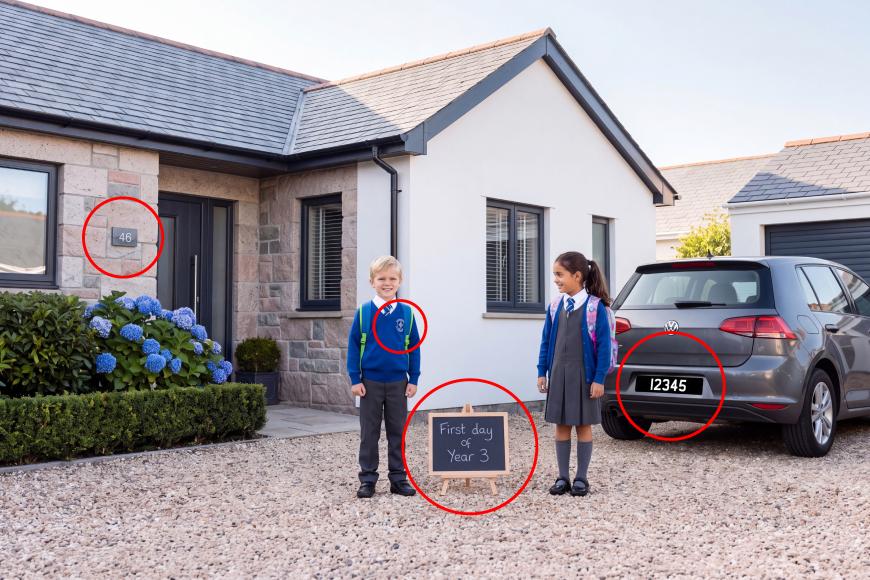
It is a tradition cherished on both sides of the Atlantic.
That special photograph you take of your child to mark the first day of a new school year. Added to those from years gone by, it becomes a storybook of memories.
I proudly took that photograph of my daughter this year.
But in 2026, what you do next may require a bit more thought than it would have ten years ago. Do you post it online? And if so, who are you sharing it with: close friends, family, or a wider audience?
A few weeks ago, Sussex Police issued an excellent reminder about just how much information can be found in a single photograph. The message was subsequently echoed locally by Guernsey Police. Something as innocent as a ‘first-day-of-school’ picture can reveal names, ages, schools, house numbers, vehicle registrations, locations and daily routines.
As one police officer observed, a picture can contain "a thousand minutiae". Individually, those details may seem insignificant. Together, they can reveal a remarkably detailed story.
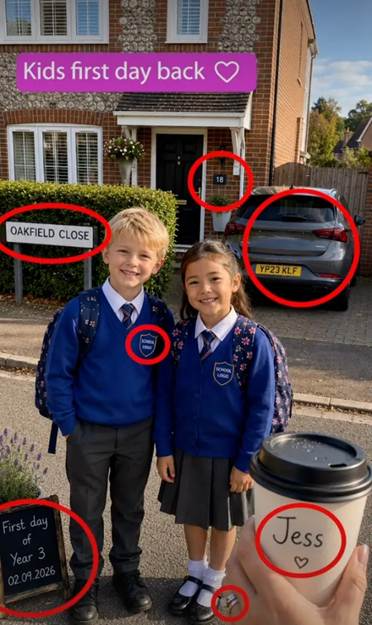
Depending on how broadly we share it, that story can be distorted or used in unintended and harmful ways.
There is a key term we should be aware of in the digital era: sharenting. The word combines "sharing" and "parenting" and describes the posting of information, photos and videos of our children online.
To be clear, most sharenting comes from a place of love. Parents are proud of their children. Grandparents living overseas want to watch them grow. Family and friends delight in celebrating milestones.
The challenge is that every post contributes to a digital footprint being built long before a child is old enough to understand, let alone consent to, its creation.
Over time, seemingly harmless details can begin to accumulate. A uniform reveals a school. A sports jersey reveals a club. A birthday message reveals an age. A holiday photograph reveals when the family is away. A sign in the background may reveal a location. Even an apparently trivial detail, such as a name on a coffee cup or school bag, can provide information that someone with malicious intent may choose to exploit.
For many years, the primary concern in this realm was oversharing, but today there is a new high-tech consideration and risk.
Artificial intelligence has fundamentally changed the nature of online imagery. A photograph is no longer simply a picture. It may become part of an exploitable dataset, to be copied, altered, manipulated or used in ways never imagined by the person who originally shared it.
This is why data protection authorities around the world have become increasingly concerned about AI-generated imagery and deepfakes. Deepfakes are realistic but fabricated images, videos or audio recordings that appear genuine. In the most serious cases, deepfakes represent highly harmful, non-consensual and criminal content featuring real people.
Earlier this year, the ODPA coordinated an international response to this risk - the ‘Joint Statement on AI Imagery’ signed by 64 signatories from around the world in jurisdictions representing close to 2 billion people. At the same time, the data protection authorities of Guernsey, Jersey and the Isle of Man issued a ‘Crown Dependency Advisory’ on deepfakes. The concern was not that every photograph will be misused. Rather, it was recognition that AI has made misuse easier, cheaper and more accessible than ever before, particularly where images of children are involved.
Now let’s be clear. None of this means parents should stop taking photographs or sharing treasured family moments. Photos remain one of the most important ways we capture the story of our families. Years from now, those ‘first-day-of-school’ pictures may be among our most cherished possessions.
But we are living in a digital era that demands an elevated level of diligence and care. The very technologies that allow us to capture and share some of our most precious moments also create opportunities for those moments to be framed out of context, manipulated, or misused. It can be tempting to respond with fear or simply stop sharing altogether. But that would mean forfeiting many of the benefits that digital technology brings. A better posture is vigilance. Just as we teach our children to look both ways before crossing the street, so too must we learn habits that help us navigate the opportunities and risks of the online world.
One of those habits is that before we click "post", we should pause and ask ourselves a few questions. Perhaps we share with a smaller family or friend group rather than unrestricted to the world. We should also look at the image as a stranger might. What can be seen in the background? Who will be able to view it? Is there identifying information that could be cropped, blurred or removed? Have privacy settings been checked?
In many cases, a small adjustment is all that is needed.
As parents, grandparents and carers, we all have the very best intentions. By exercising judgement and taking a few simple precautions, we can continue creating and sharing wonderful family memories while helping ensure those we love are protected from risks they may never even know existed.