
In his latest Guernsey Press column, Bailiwick Data Protection Commissioner Brent Homan describes how a simple sunflower speaks volumes about inclusion, dignity and privacy.
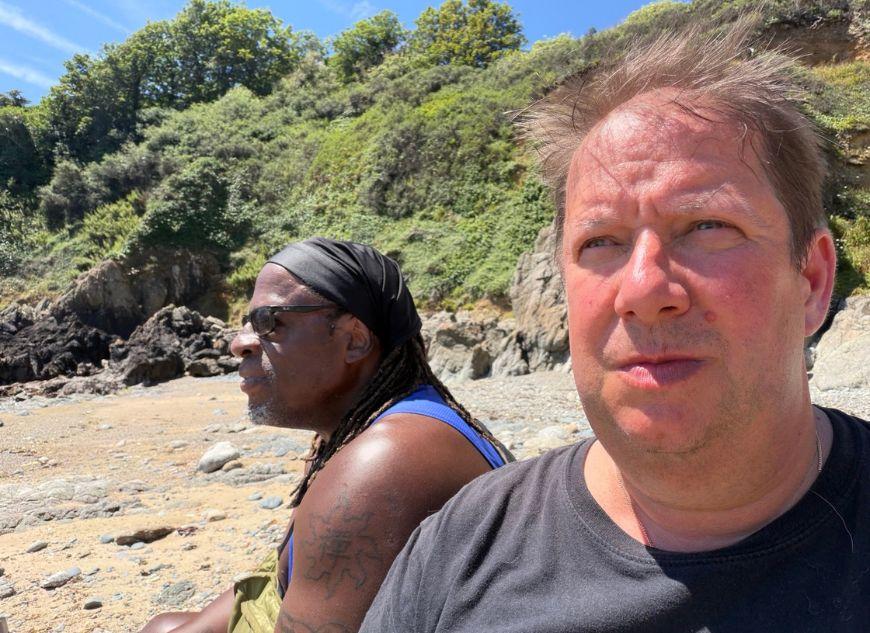
This summer I received a special gift: a visit to my new island home from one of my oldest friends. We met as schoolboys decades ago and this would be the first time he had ever visited the United Kingdom, let alone Guernsey. It was a journey that he could not have taken, without the help of a “sunflower”.
Like millions around the world, my friend lives with conditions that are not immediately visible to others. On the surface, he resembles more a retired professional athlete than someone who struggles daily with disabilities.
Before embarking on the trip, he obtained a ‘Hidden Disabilities Sunflower’ lanyard. If you are unfamiliar with the scheme, the sunflower is a simple symbol that discreetly indicates that the wearer may have a disability or condition that is not immediately obvious and may benefit from a little extra understanding, patience or support.
Globally, around one in six people live with a disability. Many of those disabilities are visible. Many are not. They may include neurological conditions, mental health challenges, chronic illnesses or sensory impairments. A unifying feature of these conditions is that they are easily overlooked by others.
My friend's courageous journey began in Canada. What followed was a series of small acts of kindness that left a lasting impression.
At Gatwick Airport there was a warm welcome and an escort to navigate terminals. Along the way there were smiles, knowing nods and offers of help when needed. Simple gestures of that made a potentially unsettling journey a joyous one.
When he arrived in Guernsey, the experience continued. I joined him in what became a game of “sunflower spotting” be it in shop windows or transport facilities. And soon, the true power of the sunflower became apparent to me.
I started to appreciate the confidence and empowerment that the symbol can provide.
For someone living with a hidden disability, everyday experiences that many of us take for granted can be accompanied by uncertainty or anxiety. A visible sign that support is available can transform an intimidating moment into an enjoyable one. It can also mean the difference between staying home and setting out on a trans-Atlantic adventure.
My friend, who is also a disabilities advocate, was genuinely moved by the awareness and kindness he encountered, not only in the UK but particularly here in the Bailiwick. He spoke repeatedly about feeling welcomed, understood and respected.
And that led me to an unexpected epiphany.
You may reasonably be wondering what any of this has to do with privacy and data protection.
The answer is: quite a lot.
When we are discussing hidden disabilities, we are often talking about a person's most sensitive personal information. Medical information is among the most private data that any of us possess.
Yet the brilliance of the Sunflower scheme is that it does not require people to surrender that privacy.
A person does not need to disclose a diagnosis. They do not need to provide detailed medical records. They do not need to explain deeply personal circumstances to complete strangers.
Instead, they can simply communicate: I may need a little extra help and understanding.
Nothing more.
For some people, choosing to self-disclose can be empowering, while for others it may not feel comfortable or safe. There really isn't a right or wrong choice, it’s a deeply personal decision. A decision that remains entirely theirs.
That simple balance between support and privacy struck me as a powerful example of human-centred thinking. It recognises two equally important truths: that people sometimes need help, and that they should retain control over their personal information.
Since my friend's visit, I had the privilege of sharing data protection tips with individuals living with hidden conditions at an outreach session to empower vulnerable adults. During the event, a sunflower lanyard immediately caught my attention and emotions welled up inside me. I understood its significance in a way I had not before.
What I saw was not merely a symbol of disability.
I saw a symbol of courage.
A symbol of trust.
And a symbol of a larger community willing to respond with kindness and compassion.
When my friend boarded his flight home from Gatwick, he told me how fortunate I was to live in Guernsey. I couldn’t agree with him more.