
Deputy Data Protection Commissioner Rachel Masterton reflects on the role women can play in shaping the ethical use of Artificial Intelligence, the importance of collective voices in addressing emerging harms, and why sharing knowledge and experience may be one of the most powerful tools we have.
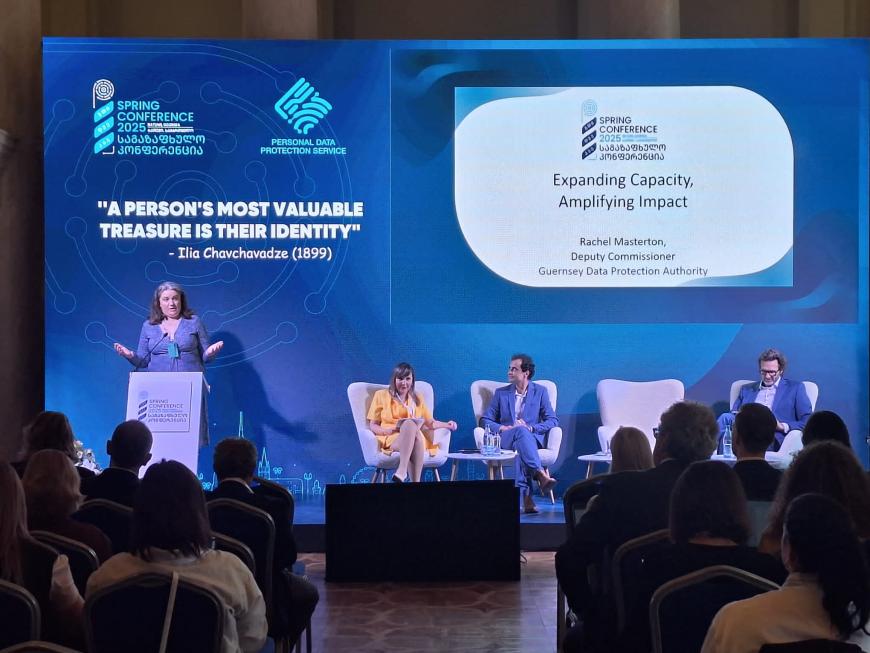
Perhaps an odd confession for a blog focused on International Women’s Day but I have never fully gelled with the idea of us ‘needing a day’. I’ve been back and forth on the reasons why and decided that what summed up my position best was a quote from the US drama, The West Wing. When asked why she objected to the Equal Rights Amendment, Ainsley Hayes responded with the following:
“Because it's humiliating. A new amendment we vote on declaring that I am equal under the law to a man, I am mortified to discover there's reason to believe I wasn't before.”
But I realise that my reticence to ‘get on board’ is very much influenced by the privilege I have to live in an affluent democracy and that for many woman across the globe the reality is that they are seen as less than whether under the law or more generally by the society of which they are a part. And as time and technology move on, this gap is perpetuated. The Commonwealth Security Review for 2025/6 highlights that women have the most to lose to AI automation and are underrepresented in the industry. Only 22% of AI professionals globally are women and this drops to less than 14% in senior executive roles.
A couple of weeks ago, I was fortunate to the invited to the Global Executive Women Leadership Summit: Advancing the Ethical and Responsible use of Artificial Intelligence. This meeting of remarkable women was an opportunity to consider the impact of AI on women and the impact women could have on AI.
The keynote speech was given by Baroness Verma, who has been in the House of Lords since 2006 and is a longstanding advocate for diversity, equality, and women’s rights. The prominent role she has had in advancing gender equality both in the UK and internationally including through her time as the Ministerial Champion for Tackling Violence Against Women and Girls Overseas has seen her work to amplify the voices of women and girls and promote inclusive leadership.
Her message was clear. AI development currently lacks emotional and social intelligence and is not representative of diversity, whether that be diversity of gender, race or ethnicity. The lived experience of traditionally underrepresented groups needs to be included in technological and systems development and those able to bring that to the table are to be encouraged and included. Generative AI has power to be a great leveller, if trained on diverse and representative data, taking a well-rounded and fully informed view. And her call to action was for the women present to use the power of their communities and the power of their voices to call for and drive change. So this is me, answering that call.
Global data protection and privacy authorities have used the power of their communities and the power of their voices to plant a flag in the sand when it comes to the use of generative AI to create non-consensual intimate imagery and other harmful content featuring real individuals. Last month, sixty-one regulators joined together in a commitment to work together, in many forms, to prevent this misuse and protect from potential harms such as cyber-bullying and/or exploitation. This is particularly relevant on International Women’s Day as women are one of the groups most targeted and harmed by such activity.
The joint statement also laid out the expectations the signatories for the development and deployment of image generation AI systems including:
- the implementation of robust safeguards to prevent the misuse of personal information and generation of non-consensual intimate imagery and other harmful materials;
- ensuring meaningful transparency about AI system capabilities, safeguards, acceptable uses and the consequences of misuse;
- the provision of effective and accessible mechanisms for individuals to request the removal of harmful content involving personal information; and
- the addressing of specific risks to children.
In addition, the data protection regulators of the Bailiwick of Guernsey, the Isle of Man and Jersey helped strengthen the power of their communities by joining the power of their voices together to release a data protection advisory. This was designed to help individuals understand this technology and provide steps they could take to lessen the risk of their image being used without their knowledge or consent.
A speaker at the Global Executive Women Leadership Summit told the story of Ananse and the pot of wisdom. Ananse was given the pot and did all he could to protect it and keep the wisdom to himself, believing its value was for him alone. Struggling to do this, he dropped the pot that broke and the wisdom spilled on the ground meaning many people were able to benefit from it. It is time, on International Women’s Day, for those that know to share the wisdom with those that don’t and for those with a voice to use it to raise others.